
Interview Strategy
How AI Is Transforming Modern Interviews
Artificial intelligence is changing the way candidates prepare and respond during interviews. Learn how AI-powered tools can help you structure better answers, stay confident, and perform more effectively in real-time conversations.
Apr 01, 2026 • 6 min read
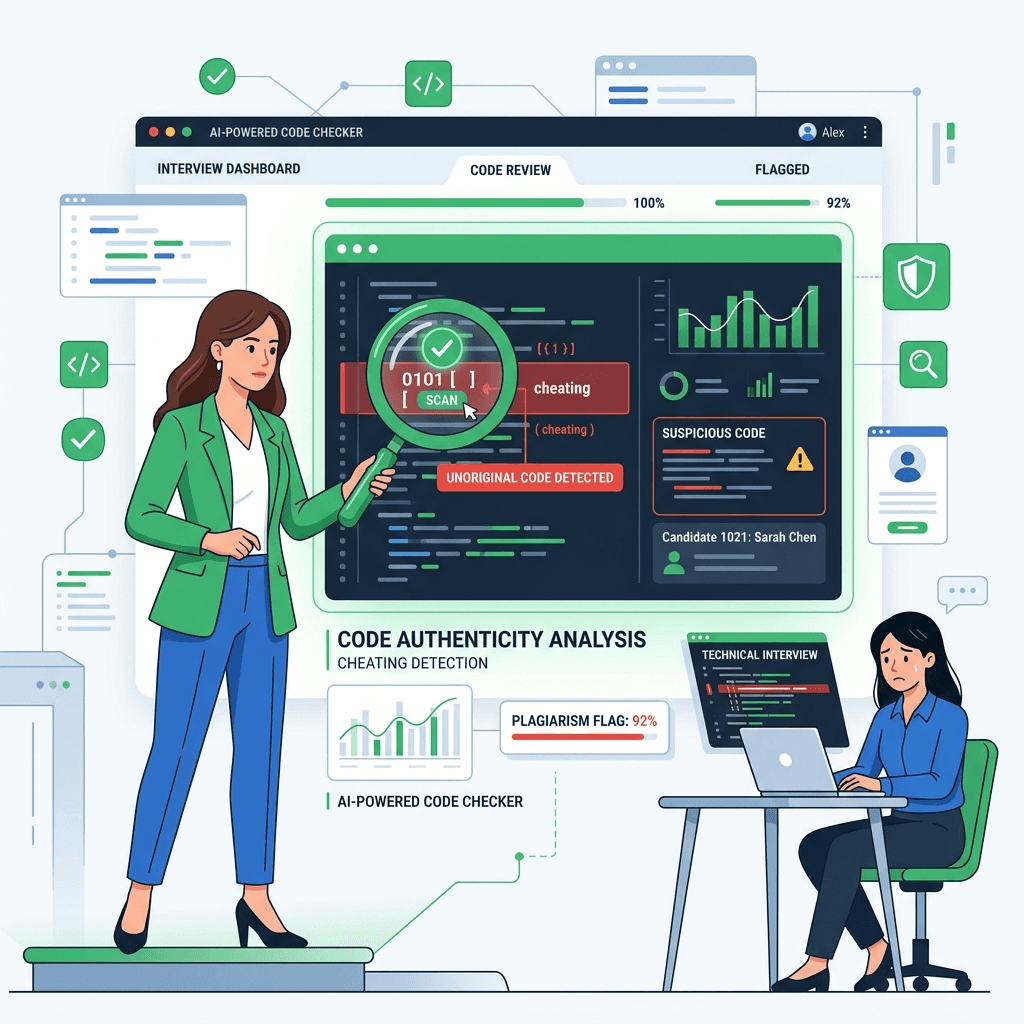
The landscape of technical interviewing has drastically shifted. With the rise of AI assistants, candidates are increasingly worried that using tools like Neenja might get them flagged for 'cheating'. It is a valid fear—no one wants their dream job offer rescinded because an automated proxy flagged their behavior. However, the key lies not in abandoning the tools, but in mastering how you interact with them.
First, we must define what modern anti-cheating systems are actually looking for. They do not magically detect the presence of AI; they detect 'inhuman patterns'. The most glaring red flag is blind copy-pasting. If your answer suddenly shifts from a conversational, slightly hesitant tone to a perfectly structured, vocabulary-dense monologue that sounds like a Wikipedia article, you raise suspicion. It is the whiplash in tone that gets candidates caught.
Using AI as a 'copy-paste machine' implies that you are outsourcing your thinking. Instead, the modern, accepted approach is to use AI as a 'logic verifier'. Think of it as a senior engineer sitting next to you. You wouldn't ask a senior engineer to take the keyboard and write your exam; you would ask them, 'Hey, does this edge case make sense?' or 'Am I missing a parameter here?'
To execute this safely, you must always own the core narrative. Start by answering the question yourself, framing your response with your authentic voice. Then, glance at your AI overlay to verify edge cases, tighten your reasoning, or surface a missing point you hadn't considered. For example, if you are asked about scaling a database, give your initial thoughts on sharding, and let the AI remind you to mention connection pooling.
Furthermore, the best candidates practice 'traceable iteration'. When an AI assistant provides a hint, do not just regurgitate it. Paraphrase it, connect it to your previous thought, and explain why you are incorporating it into your solution. If you can explain why you chose a solution, what trade-offs you made, and what you would improve next, you will sound like a prepared professional using modern tools responsibly.
Ultimately, the goal is augmentation, not substitution. Companies are increasingly recognizing that the modern workflow involves AI. If you demonstrate that you can use these tools to elevate your own critical thinking—rather than replacing it—you bypass the cheating algorithms and present yourself as the highly effective, tech-fluent candidate they actually want to hire.